Matt Vojacek has signed seven figure contracts while wearing a backwards hat. He told me that on the show and then kind of shrugged, like it was nothing. It stuck with me, because it points straight at something most marketers are getting wrong right now.
We are all staring at the same problem. The tools got cheap. The output got easy. Everyone can produce something decent in an afternoon. And in a market where decent is suddenly free, the question stops being "can we make this" and becomes "why would anyone choose us." Matt has been sitting with that question longer than most, because he runs a motion design studio in a field AI came for early and hard. His answers are the most useful thing a guest has said about marketing on this show in a while.
The bar did not rise. The middle got crowded.
Here is the Matt line I keep repeating to people. "AI can help anyone become average. But is average going to be enough when everybody does it?"
Sit with that, because it is not the take you usually hear. Most of the AI conversation is about speed and scale. Make more, faster, cheaper. Matt's point is that speed and scale are exactly what everyone else has now too. When the whole market can hit average in minutes, average stops being a floor you stand on proudly. It becomes the crowd you disappear into.
He described it as a bell curve getting shoved sideways. The work that used to count as fine now sits in a pile with a thousand pieces that look the same. Your buyer is not comparing your marketing to nothing. They are comparing it to the flood. And a flood of competent, samey, AI-flavored content is very easy to scroll past. I wrote a whole piece on this exact trap, why your website betrays trust and how to actually stand out, and Matt's framing is the cleaner version of the same warning.
This is not an anti-AI argument, and Matt was clear about that. He got into 3D animation back when traditional animators were furious about the new technique showing up. He is not going to be the guy yelling at a tool. His studio runs experiments with new software constantly and asks one question about each one. Does this make the work better. If it does not, he is not interested just because it is faster. That is the filter marketers should be using too. Not "can AI do this" but "does using it here make the result better, or just cheaper to produce something forgettable."
Creating versus curating
The sharpest distinction Matt drew was between creating and curating. When you use a tool that generates the thing for you, you are curating. You are picking from options a machine produced. When you actually make the thing, you are creating. Both are fine. They are just not the same, and Matt thinks a lot of people have started calling themselves creators when the honest word is curators.
Why does that matter for a marketing team. Because curation is easy to copy and creation is not. If your entire content operation is prompt, pick, post, then a competitor with the same subscription can replicate your whole approach by Friday. The thing that cannot be copied is the part that came out of you. Your actual point of view. The story only your company can tell. The specific way you understand your customer's problem.
Matt builds his studio around this. Everything starts from story, because story is what people remember and what a competitor cannot lift wholesale. The goal, as he puts it, is to make something that makes people feel something. That sounds soft until you notice it is the one moat AI has not crossed. For B2B marketers the translation is direct. Your website, your emails, your decks, your founder's presence. The version that wins is not the fastest to produce. It is the one carrying a real perspective a buyer cannot get anywhere else. That is why we spend so much time making sure a website actually supports marketing and sales conversations instead of just looking modern. A polished site that says nothing specific is the digital version of average.
What this means for how you show up in AI search
There is a second layer to the average problem, and it is one I care about a lot right now. Buyers increasingly start in AI. They ask ChatGPT or lean on an AI Overview before they ever run a normal search. If your content is the same undifferentiated mush as everyone else's, you do not get cited. You do not get pulled into the answer. You get averaged out of existence.
The brands that surface in AI answers are the ones with a clear, specific, well-structured point of view a model can actually attribute to them. Generic content is invisible to a machine trying to summarize a category. This is the work behind our AI and LLM website visibility service, and if you want to see how we do it on our own site rather than just talk about it, I broke the whole thing down in our exact AI search strategy for 2026. It rhymes perfectly with Matt's point. The move is not to produce more. It is to be worth quoting.
So the AI era pushes in two directions at once. It floods the top of your funnel with sameness, and it rewards the few who refuse to be generic. Matt lives on the right side of that split because his work is unmistakably his. That is the position worth fighting for.
Sales is just making friends at scale
If story is how Matt stays differentiated in the work, relationships are how he sells it. And his sales approach is the other half of the antidote to an AI-saturated market.
He does not cold call. He does not wear the suit. He shows up as himself, backwards hat and all, and he plays a long game on purpose. His sales cycle for the kind of projects his studio does runs twelve to twenty-four months. Nobody meets him and signs a week later. So instead of forcing it, he builds relationships and lets the timeline be the timeline. The line that landed hardest for me. "Nobody meets me and decides we are working together in a day. So why try to play that game."
When he traces back where his projects actually come from, it is a trail. A few newsletters. A LinkedIn comment. A lunch. A conversation months earlier. Fourteen months of small human touches that finally turned into a contract. My own framing is that B2B sales is just making friends at scale, and Matt is proof. The reason this matters more now, not less, is that AI can fake the output but it cannot fake the relationship. Anyone can generate a cold email. Nobody can automate the fact that you showed up consistently, stayed useful, and were a real person for a year. In a market drowning in automated outreach, being genuinely known is the unfair advantage. It is the same engine I used to build the studio, which I documented in how I built a $200K marketing studio in Columbus using LinkedIn and a podcast. Same lesson, different chair.
The part nobody wants to hear
Matt is honest about the unglamorous side, which is why I trust his advice. He talks openly about the year he hit his revenue number and felt hollow. About years his employees made more than he did. About how the whole thing takes ten years before it really pays off, and if you do not love the journey, you will be miserable.
He also has a discipline habit that is almost boring. He runs a couple times a week, has for years, not for fitness but as practice at showing up when he does not feel like it. That is the muscle under everything else. The story, the relationships, the refusal to be average, none of it happens without the plain willingness to keep showing up on the days it is not fun.
One more line every founder-marketer should tattoo somewhere. "Stop offering the things you do not really want to do." He called it his best late lesson. For a long time he offered everything he could, and it scattered him. Cutting the work he did not want was what let him get great at the work he did. For marketers wearing ten hats, that is permission to go narrow on purpose.
Where this leaves you
The through line is simple and a little uncomfortable. AI made it easy to be average, so average is no longer a business. What is left, the part that still commands seven figures and a backwards hat, is the stuff that was never automatable. A real point of view. Work that makes someone feel something. Relationships built patiently over a long horizon. Being unmistakably yourself while everyone else blends in.
If you are a marketer or founder watching your feed fill with sameness, that is not a threat. It is the opening. The bar to stand out did not get higher. Most of your competitors just walked into the middle of the crowd and started producing more of the same. You do not have to.
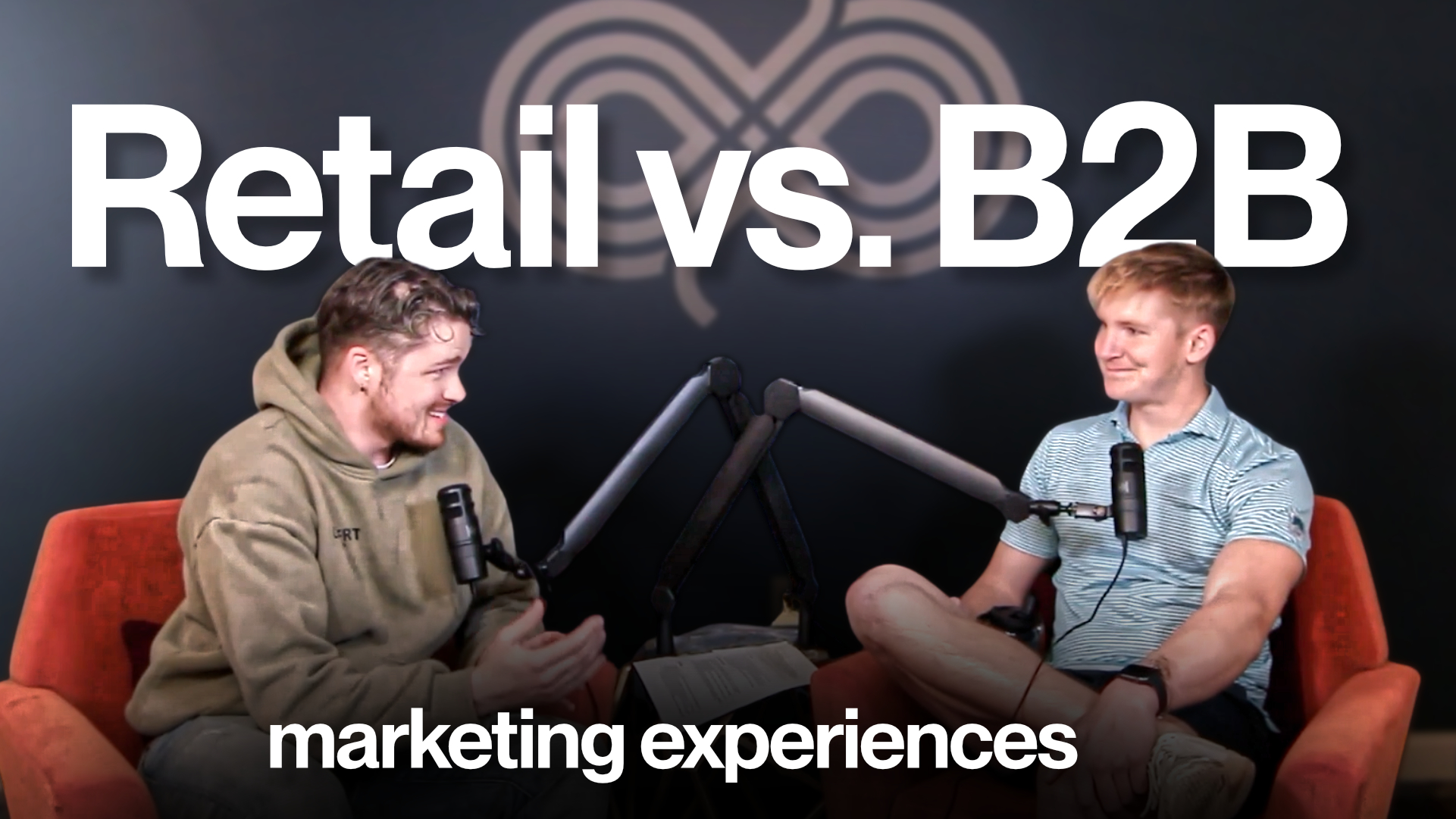
Go listen to the full conversation with Matt on Marketing by Design. Grab his book, The Business of Making Things, see the studio at Made by Things, and if you are anywhere near Columbus, Making Midwest is worth your time. You can also connect with Matt on LinkedIn.
And when you are ready to make your own marketing impossible to average out, start with our High-Converting Websites Visual Swipe File. It is the fastest way to see what "not generic" actually looks like on a page.













.avif)






.avif)
































.avif)

.avif)
.avif)
.avif)
.avif)
.avif)
![[GREATEST HITS] Lacey Picazo on Differentiating Yourself as a Marketer/Creative in Columbus](https://cdn.prod.website-files.com/697bc5477a07f38cecb116d4/6993c46884f01f1608ed863d_67edf1ef876dadc49a875b6b_Lacey%2520Spotify.avif)
.avif)

.avif)
.avif)
.avif)
.avif)
-1.avif)