If you're a freelance marketer in Columbus, Ohio (or anywhere else) trying to land your first few clients, or you're aiming for your first six-figure year, this is the playbook I wish someone had handed me when I was laid off from my full-time graphic design job on February 1, 2024.
Eighteen months later, MMG Studio is consistently doing 20K a month. We have a clearly defined niche in healthcare, repeatable lead generation systems, and a podcast with two paying sponsors. In my first full year, I cleared $200,000 in revenue.
I'm not telling you that to flex. I'm telling you because it was built almost entirely on two things any freelancer with a laptop and a webcam can do: LinkedIn and a podcast.
This post is the exact framework I presented at the SEO Search Summit a few weeks back. If you'd rather watch the full talk, here's the video. Otherwise, keep reading.
The starting point: laid off, broke, and feeling lost
On February 1, 2024, I got laid off from a Columbus design agency. Single-floor office, 60 plus employees, and I was the only one cut that day. Everyone watched me pack up.
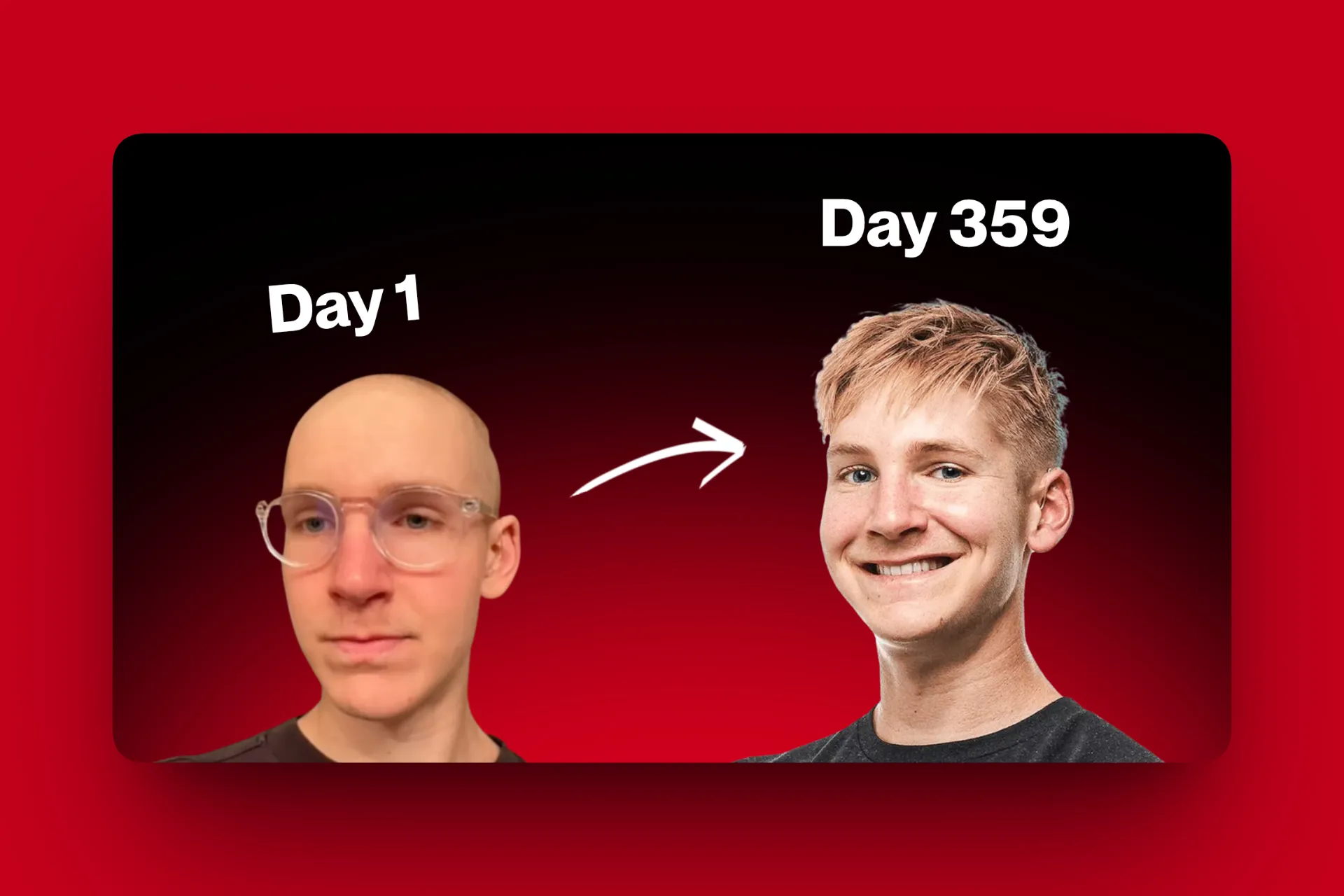
I had two paying clients, no savings to speak of, and at the time, the lowest self-esteem I'd ever had. I went home, shaved my head (don't ask), and started doing what most freelancers do at the bottom: post on LinkedIn, hope something works, and try not to spiral.
In February I made $2,300. March was $2,500. April crept up to a little over $4K. May dropped back to $2,700. June was my first breakout month at $11,000, and then July dropped back down to $3,000.
Sound familiar? That's freelancing in year one. It's a roller coaster, and most of the people you'll see flexing their numbers online conveniently leave that part out.
Here's what changed it.
Before the tactics: the mindset shift that matters most
If you're going to take one thing from this post, take this.
Say it to yourself out loud: "I am someone who is interesting and can be valuable to anyone, even if they are two or three steps ahead of me or make more money than me."
That sentence is half the battle. Most freelancers I talk to don't lack tactics. They lack the belief that they have something worth saying to people more successful than them. That belief gap is what kills outreach, kills podcasts, and kills LinkedIn content before it ever gets traction.
You have a story worth telling. You can leave an impression on someone two steps ahead of you in 30 minutes of honest conversation. Until you actually believe that, the rest of this playbook will feel awkward and won't work. Once you do, everything that follows clicks into place.
Why LinkedIn plus podcasting works for freelance marketers
The combination of LinkedIn plus a podcast works because it solves the two hardest problems freelancers face: visibility and trust. LinkedIn gives you a B2B platform where you can curate the exact audience of buyers and partners you want in your network. A podcast gives you an excuse to have meaningful conversations with those people without it ever feeling like a sales pitch.
Together, they create what I call the three-headed beast.
- Podcasting creates awareness with your ideal clients and builds credibility before they ever talk to you. It makes outreach warm instead of cold.
- LinkedIn gives you visibility, control over your audience, and a publishing platform where your content reaches the exact people who could buy from you.
- Lead generation activities are what turn the first two into actual revenue. Without this third leg, the other two are just content for content's sake.
When freelancers tell me this approach didn't work for them, it's almost always because one of those three legs is missing. Usually it's the third one.
A quick honesty check: there is no way to speedrun trust. You cannot fake your way through this. What you can do is accelerate the process by being genuine and consistent. That's it. That's the secret.
How to use a podcast to build a freelance business
A podcast is the highest-leverage content format I've ever used in my freelance business. While you're recording, you're simultaneously building an audience, deepening relationships with potential clients and partners, getting reps on camera, and creating content for LinkedIn. You're working four levers at once.
The three things every freelancer's podcast needs:
- It has to add value to your ideal clients. Don't make a show that's just you and your friends shooting the breeze. Interview people who would be productive to know.
- It has to be process-driven. You're not a podcast production company. Build a light system you can actually sustain weekly or biweekly.
- It has to be enjoyable. Not every episode will be a banger. Some will feel flat. You need to enjoy the format enough to come back to it for two years before it pays off the way you want it to.
The 10 / 20 / 70 guest mix for a freelance podcast
When I audited my own show, Marketing by Design, I noticed my guests fell into three buckets. This mix is what's actually driven business.
- 10 percent potential clients. People who could directly hire you. Keep this small or your show turns into a sales pitch and your audience can smell it.
- 20 percent thought leaders. Bigger names who elevate the status of your show, get you reshare visibility, and help attract sponsors. For me, that's been people like Andy Crestodina, Josh Hall, and Jay Clouse.
- 70 percent referral partners. This is the play. Referral partners are people who serve the same clients as you, but in a different way. A WordPress agency when you build in Webflow. A healthcare data analytics firm when you build healthcare websites. A custom developer when you sell strategy.
Referral partners send you work. They send a lot of work. Two of my podcast guests have referred deals worth more than 10K each, with one explicitly saying he plans to send leads my way that don't fit his agency's 80K minimum.
That's the math. Build relationships with people who serve your buyers in a different way, give them a reason to know you (the podcast), and the work will come.
Three high-leverage podcast habits
If I could only do three things to make a podcast work for business, these would be it.
- Timely follow-up. The day you record, send the guest a screenshot from the recording and a short thank-you. That's where 99% of the relationship value lives.
- Give them everything. Before or on launch day, send them every asset: thumbnails, video, clips, the full episode, links, show notes. Make it stupid easy to reshare.
- Build a testimonial flywheel. Use a tool like Senja to collect testimonials from guests. Use them on your show notes, your sponsorship deck, and your outreach. Past guests become proof for future guests.
How to use LinkedIn to get freelance clients in Columbus, Ohio (or anywhere)
LinkedIn works for freelance marketers because it's the only major platform where you can hand-pick your audience. You can search by job title, send up to 200 connection requests per week, and publish content in front of people who could literally buy your services. No other platform gives you that level of control.
The four reasons LinkedIn is the right platform for freelance marketers:
- Visibility in front of B2B buyers.
- Control over who sees your content (your network is your audience).
- Match. Most of us are selling to business owners, and business owners are on LinkedIn.
- Flexibility. Video, carousels, text-only, photo posts. Anything works if you commit.
Nine LinkedIn post types that actually drove clients for my freelance studio
When I went back through my best-performing LinkedIn posts that led to actual clients, they fell into nine recognizable patterns. The full breakdown is in the deck (reach out and I'll send it), but here's the short version:
- The intro post. A "this is who I am, this is what I do" reset. Use it now if you've been quiet on the platform.
- The pitch in public. Tear apart a website (constructively), or redesign a hero section on video. This one went viral for me more than once.
- The announcement. Milestones, follower counts, podcast launches. Position humbly. Success begets success.
- Social proof. Client testimonials, ideally on video.
- The detailed case study. Walk through a project with the tool stack, the client, the outcome, and the testimonial.
- The personal business transformation. Where you started, where you are now. People come to LinkedIn to be entertained more than the platform admits.
- The number one rule (or spiky point of view). Take a strong stance on something core to your work. It builds confidence and attracts the right people.
- The personal touch. Tag people in your network you're grateful for, with a real reason for each one.
- The local effect. A behind-the-scenes from a Columbus event, AMA networking night, or co-working space. Local context is one of the most underrated trust accelerators on LinkedIn.
If you're starting from scratch, do the intro post this week. Then commit to a minimum of three posts a week (Monday, Wednesday, Friday) and build from there.
LinkedIn profile basics that get freelancers more inbound
Treat your LinkedIn profile like a landing page. You're a designer or a marketer or a strategist. You know how to do this.
- Featured link pointing to your site or a contact form.
- Bio with two or three "latching points" people can mention in DMs (your platform, your company, your podcast, a personal detail).
- Location set to the closest major metro. If you live in Worthington, your profile says Columbus, Ohio. It's better for indexing and credibility.
- Banner with your company logo, a clear value prop, and a piece of social proof (client logos, a stat, a star rating).
The most important section: daily lead generation activities
This is the part most freelancers skip, and it's the part that actually moves the business.
If you started a freelance business, you signed up to be a marketer for that business. That's not optional. If you're posting content sporadically, sending the occasional DM, and waiting for inbound, you are not running a business. You're running a hobby with a Stripe account.
Here are the four daily and weekly activities that produce predictable results.
1. Send connection requests every week
LinkedIn lets you send up to 200 connection requests per week. Get as close to that as you can without getting flagged. I send around 20 a day. Be picky about who you send to (potential clients, referral partners, podcast guest candidates), but send them.
2. Have actual conversations
When someone accepts your request, go to your network tab and start a conversation. Talk like a human. Not "great to connect, here's my service offering." Mention something specific. A mutual Slack channel. Their last post. The Columbus winter. Whatever's real.
The freelancers who win on LinkedIn don't have better content. They have more conversations.
3. Follow up like the world depends on it
Most freelancers are afraid of looking annoying. Get over it. Follow up until they say yes, they say no, you die, or they die. Use the Fibonacci follow-up cadence: 1 day, 3 days, 6, 12, 24, 48, 96. I use a tool called Dex to automate the reminders.
A surprisingly effective fourth follow-up: a Mr. Bean GIF. Don't ask why it works. It just does.
4. Track everything
Spreadsheet, Notion, CRM, doesn't matter. Log every connection, every conversation, every podcast guest, every follow-up. What gets measured gets managed. I record a public monthly retro on YouTube going through the previous month's revenue, pipeline, and lessons. That public accountability is half the reason this thing has worked.
Your 7-day starter playbook
If this is the first piece of mine you've read and you want a place to start, here's what I'd do this week.
- Today. Write the intro post. "I am [name]. Here's what I do. Here's who I help. Here's what I'm building." Post it.
- This week. Build a list of 100 people who fit the three guest types (10 percent clients, 20 percent thought leaders, 70 percent referral partners). Send 20 connection requests by Monday.
- Within 30 days. Record episode one of your podcast with the most accessible person on that list. Don't wait for the perfect setup. The first ten episodes will be rough. Do them anyway.
- Ongoing. Three LinkedIn posts a week minimum. Twenty connection requests a day. Real conversations with everyone who accepts. Follow up relentlessly.
That's it. That's the whole thing.
The Columbus, Ohio piece
A quick note for the Columbus crowd specifically. This city is one of the most underrated places in the country to freelance, especially in marketing and design. The community is tight, the introductions move fast, and groups like AMA Columbus, COhatch, and the local Webflow and SEO meetups are full of people who actually want to refer business to each other.
If you're freelancing here and you haven't tapped into that local network, that's the first move. Show up to one in-person event a month. Tag the people you meet in a LinkedIn post the next day. Connect with everyone there. The local effect is real, and it compounds faster in a mid-sized city than it does in New York or LA.
If you want to grab coffee, send me a message. I take meetings with Columbus freelancers regularly because somebody did it for me when I was the one who'd just been laid off.
Frequently Asked Questions
How long does it take to make six figures freelancing?
It took me about 11 months from getting laid off to consistently clearing five figures a month, and 14 months to cross six figures in trailing revenue. That timeline is faster than average because of the LinkedIn and podcast strategy, but it's slower than the case studies you'll see online. Most freelance businesses that hit six figures take 18 to 36 months. Anyone promising you a faster timeline is selling you a course.
Do I need to be in a major city to freelance as a marketer?
No. The local effect helps in a city like Columbus, Ohio because the community is mid-sized and tight, but the LinkedIn plus podcast strategy works anywhere. I have referral partners in five different states and clients in three. The platform doesn't care where you live. It cares whether you're consistently visible to the right people.
What's the best podcast format for a freelance marketer?
Interview-based shows work best for lead generation because they're an excuse to build relationships with potential clients, referral partners, and thought leaders. Solo or co-hosted shows can build audience, but they don't create the same business surface area as interviewing the people you want in your network.
How many LinkedIn connection requests should a freelancer send per week?
LinkedIn allows up to 200 per week. Most freelancers should aim for 100 to 150 per week, sent to potential clients, referral partners, and podcast guest candidates. Quality of who you're connecting with matters more than hitting the cap. I've seen profiles flagged for going too high, so stay under 200 to be safe.
Should freelance marketers start a podcast or focus on LinkedIn first?
If you're starting from zero, do LinkedIn for the first 30 to 60 days while you build a list of potential podcast guests. Then launch the podcast. The two channels feed each other. LinkedIn gets your name in front of guest candidates. The podcast gives you reasons to deepen those relationships and content to repurpose back to LinkedIn.
One last thing. I record a monthly retro on YouTube going through everything I made, where it came from, and what I'd do differently. If you want to see the full unfiltered version of this 18+-month run, here's the channel. Twenty months of receipts.
Cheers, and go send the connection requests.


.webp)
.webp)