Usually I'm the one asking the questions. This time I was on the other side of the mic.
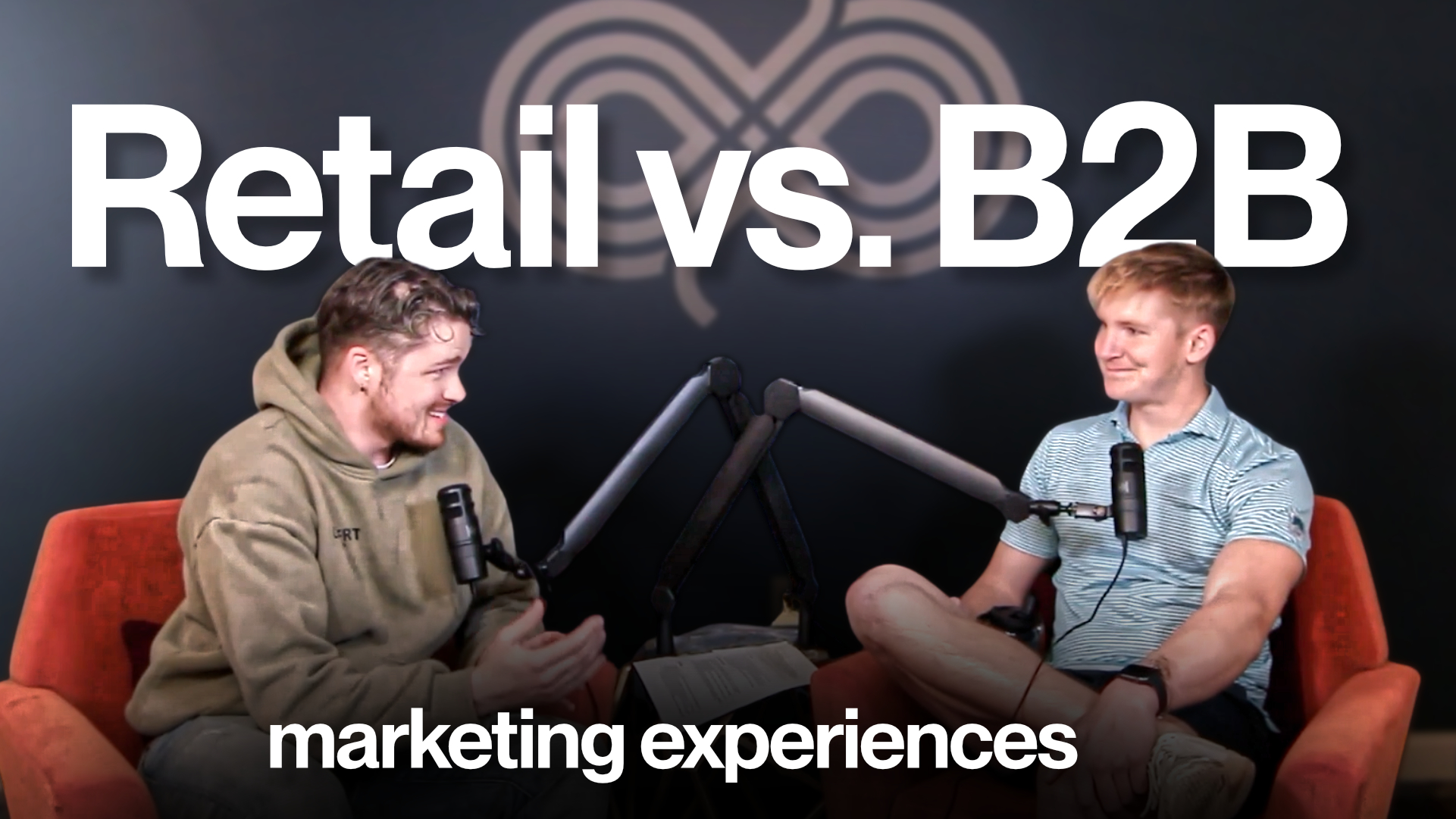
Max Miller, who leads marketing and brand strategy at Chute Gerdeman, had me on his show, Brands & Banter, to talk shop. Chute Gerdeman has been designing retail experiences for over 30 years. I build websites for B2B and healthcare companies. On paper those are two different worlds. An hour into the conversation, they weren't.
The Power Follows the Finger of Blame
Max asked me early on what I still carry with me from the early days of freelancing and building MMG. The answer I keep coming back to is extreme ownership, and specifically a line I picked up from Alex Hormozi: the power follows the finger of blame.
It sounds simple, but it changes how you run a client relationship. When something goes wrong on a project, and something always goes wrong on a project, the easiest move is to explain why it wasn't your fault. It's also the worst move. The moment you take the blame, even when it's a stretch, you keep the control. You get to say what happens next. Passing blame feels better for about five seconds and costs you the ability to fix anything.
I don't think this is a marketing lesson. I think it's a business lesson that marketing happens to need more than most, because marketing is one of the few functions where the results are visible to everyone and hard to fake.
The Bouquet of Flowers Problem
We got into brand consistency next, and Max pushed me on why it matters so much when a company shows up differently across channels. I used an analogy that I've leaned on for a while: a brand is like a bouquet of flowers. If one flower in the bouquet is wilted, the whole bouquet reads as wilted. Nobody gives you credit for the other eleven that look great.
For B2B and healthcare companies, that one bad flower is usually the website. The LinkedIn presence is sharp, the sales deck is sharp, the founder shows up well in person, and then a prospect clicks through to a site that looks like it was built in 2016 and never touched again. That inconsistency is what erodes trust before a single conversation happens. It's a big part of why website design and development isn't a cosmetic project for us. It's a trust project.
B2B Marketers Should Think Like Retailers
This is the part of the conversation I keep thinking about. Max and Chute Gerdeman spend their careers thinking about physical retail space: how a customer moves through a store, what they notice first, what makes them stay or leave. I spend my career thinking about a website. We landed on the same idea from two different directions: a website is a digital storefront, and most B2B companies design it like a filing cabinet instead.
Retail has spent decades getting obsessive about small things. Sticky navigation is the equivalent of a store layout that guides you toward the register without you noticing. Personalization, the kind Amazon does when it pairs your new shoes with the right socks, is retail logic applied to data. Most B2B sites ignore all of it. They publish a page, list some services, and call it done. Meanwhile the buyer standing in front of that page is making the exact same trust decision a shopper makes walking into a store for the first time. Does this place feel like it has its act together, or not.
That's the whole argument behind treating a B2B or healthcare website as a conversion engine instead of a brochure. It's also why we push so hard on HIPAA-compliant website design for healthcare clients specifically. Compliance and trust aren't separate conversations in that world. A site that handles patient data carelessly is the digital version of a store with a filthy checkout counter. People notice, even if they can't articulate exactly what they noticed.
Why We Niched Into Healthcare and B2B
Max asked how MMG landed on healthcare and B2B specifically, and the honest answer is that we didn't pick it off a whiteboard. One client relationship led to a referral in the Medicare space, which led to another healthcare referral, and the pattern kept repeating. The lesson underneath that isn't really about healthcare. It's that your best clients will tell you where your value actually lives, if you're paying attention instead of trying to be everything to everyone.
Once we saw the pattern, niching down made every other decision easier. What content to publish, what to say no to, which prospects are actually a fit. Being specific is a filter, and a filter is what lets you get better instead of just busier.
Extreme Ownership Applies to Community Too
We also talked about Columbus Marketing Jobs and my role with AMA Columbus, and Max asked why I spend time on things that don't have an obvious return. The short answer is that I've been on both sides of the hiring table. I've been laid off, and I've also felt how vulnerable it is to hire someone as a small agency. Columbus Marketing Jobs exists because the introductions that actually get people hired usually happen in private conversations between people who already trust each other, and a lot of good candidates never get a seat at that table.
None of that was built with a return in mind. It came from showing up consistently with no expectation of anything back, which, not coincidentally, is also the fastest way I've found to build real relationships in B2B. People can tell the difference between someone angling for something and someone who's just genuinely in the room to help.
Where to Listen
The full conversation covers a lot more than what's here, including the Tim Ferriss fear-setting exercise that made early risk feel smaller, and why I think trust online is really just design plus consistency. You can catch it wherever you listen to podcasts, or find Brands & Banter on Spotify. Connect with Max on LinkedIn, and take a look at what Chute Gerdeman builds at chutegerdeman.com.
If you want to see what a website looks like when it's built with the same attention to detail retailers give a physical store, grab our High-Converting Websites Visual Swipe File. And if you're in Columbus and hiring or job hunting in marketing, Columbus Marketing Jobs is free and worth a look













.avif)





.avif)


























.avif)


.avif)
.avif)
.avif)
.avif)
.avif)
![[GREATEST HITS] Lacey Picazo on Differentiating Yourself as a Marketer/Creative in Columbus](https://cdn.prod.website-files.com/697bc5477a07f38cecb116d4/6993c46884f01f1608ed863d_67edf1ef876dadc49a875b6b_Lacey%2520Spotify.avif)
.avif)

.avif)
.avif)
.avif)
.avif)

-1.avif)