
There's a myth in marketing that says personal branding is for founders and freelancers. That you can't build something interesting about yourself while punching a clock for someone else.
I used to believe that too.
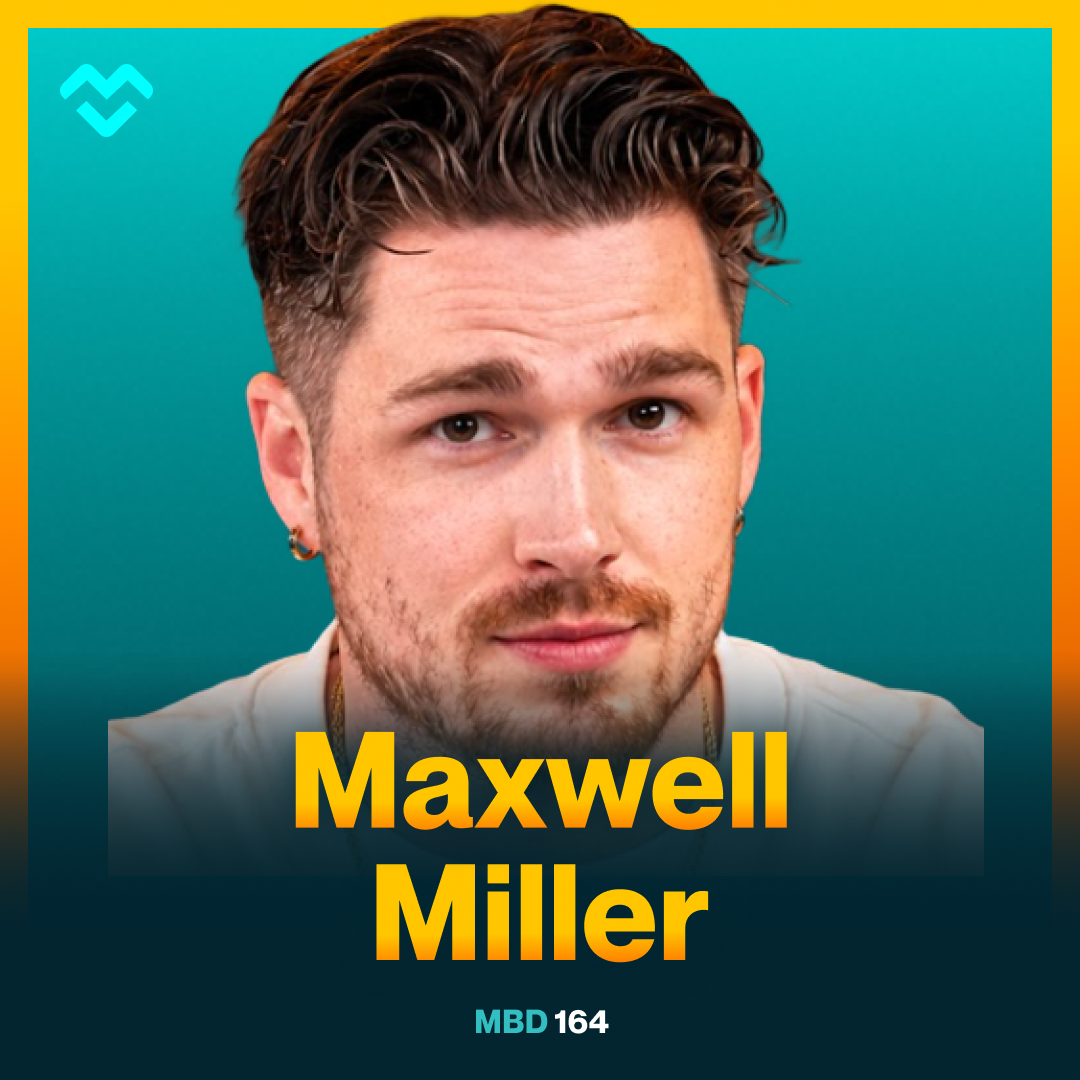
Then I met Maxwell Miller, and that belief got turned inside out.
Max works as a marketing strategist and designer at Chute Gerdeman, a Columbus-based retail design agency. He has a boss. He has a team. He has deliverables and meetings and all the things that come with a full-time in-house role. But somehow, he's also built a podcast called Brands and Banter, launched a monthly retail design newsletter called The Gist, started a side business flipping fragrances online, and become one of the most interesting marketers I know.
Not because he's doing more. But because he's doing things differently.
The Personal Brand Problem (And Why Most Marketers Get It Wrong)
I've talked to a lot of marketers across the Marketing by Design podcast, LinkedIn conversations, and coffee meetings in Columbus. I've heard the same excuse from probably a hundred people: "I don't have time to build a personal brand. I'm too busy with my day job."
What they're really saying is: "I don't know where to start, and it feels selfish to promote myself."
Maxwell told me something in our interview that cut through all of that noise. He said, "You need to start building a personal brand. You gotta think about what does my resume look like and how does it read? Do I have a portfolio? If I don't have a portfolio, I need to build one."
That's not sexy advice. It's not viral. But it's true.
The mistake most in-house marketers make is thinking that personal brand means being famous on LinkedIn or having a following. It doesn't. Personal brand is just clarity about what you're good at, what you stand for, and what separates you from everyone else doing the same job.
For Maxwell, that clarity came through the things he was already obsessed with.
Going One Inch Wide, Mile Deep
Maxwell has forty-five bottles of fragrance in his house.
I know that sounds like a random detail, but stay with me. He collects them obsessively. He buys them, studies them, and then sells portions of them online through Reddit. He makes his money back on half of them. And through that process, he's learned more about consumer behavior, pricing psychology, and niche communities than most people learn in a full marketing career.
That's not a side hustle. That's depth.
He told me something that stuck with me: "I'm always finding the next thing to go an inch wide and a mile deep in."
That's the framework. You don't need to be an expert in everything. You need to pick something that fascinates you and actually understand it. Not surface-level understanding. Deep, obsessive, "I can talk about this for hours" understanding.
For Maxwell, that's been retail design. Sensory experiences. Brand positioning. Fragrance psychology. Auditory accessibility in retail environments. Each of these came from curiosity, not from a career plan.
And when you have that kind of depth, people notice. Your perspective becomes valuable not because you're self-promoting, but because you actually know things.
Marketing Is Story. Everything Else Is Noise.
Maxwell's philosophy on marketing is almost contrarian in how simple it is. He separates marketing from sales. He separates storytelling from features. And he's built his entire career on the idea that preference beats pitch every single time.
"My goal with marketing is to generate what I call preference," he told me. "Before you even sit down at the table, I want you to think my brand is so kick ass that you're already leaning towards hiring me. That's what I'm trying to market towards that storytelling and that excitement and that swagger."
That framework changes everything about how you build a personal brand while working in-house.
You're not trying to convince people you're good at your job. You're trying to create a story about the way you think, the things you care about, and the perspective you bring. When that story is clear, the job opportunities come. The collaborations come. The interesting projects come.
At MMG Design, we talk a lot about how clarity beats everything else in marketing. That same principle applies to your personal brand. The clearer your story, the easier it is for people to understand why you matter.
For Maxwell, that story includes weird things like spending a weekend going to different malls in Columbus with decibel meters. Testing how loud stores actually are. Researching auditory accessibility in retail because he has a hearing disorder himself and he wanted to understand the problem better.
That's not a job responsibility. That's a person who gives a damn.
And that's what makes him interesting.
The Brands and Banter Gamble
About a year ago, Maxwell had an idea. He wanted to start a podcast about retail design and branding. He'd never done a podcast before. He didn't know how to edit. He didn't know what equipment he needed or which platforms to use.
He did it anyway.
"I had an idea, I want to say about a year ago, maybe even less," he told me. "I said, what if we did this podcast? What if we had a podcast that focused on retail conversations with people that loved retail or design conversations."
Now Brands and Banter (you can find it wherever you listen to podcasts) is getting real traction in a very specific niche. And the real work started fast. He had to figure out recording technology. He had to learn editing. He had to figure out distribution and guest outreach and all the logistics that come with launching a show.
Most people would have quit at that point. The friction is too high. The learning curve is too steep. The time investment doesn't seem worth it for something that might not work.
Maxwell's response was different: "As long as I don't quit, it'll never fail."
That's not toxic positivity. That's a recognition that the only real failure is not trying. Everything else is just iteration.
He credits a team member named Joanna with helping him figure out the production side. But he was the one who committed to doing it. And now Brands and Banter is getting traction in a very specific niche, which is exactly where he wanted it to be.
The personal brand benefit? He's not just another marketing person talking about marketing theory. He's someone who's building things and sharing what he's learning in real time. That's way more interesting.
The In-House Advantage (That Nobody Talks About)
Here's what I think is genius about Maxwell's approach: he's using his in-house role at Chute Gerdeman as a research lab, not a constraint.
Working in-house gives him access to real client work, real projects, real problems. He's not theorizing about retail design. He's implementing it. He's working on a forty-thousand square foot Build A Bear flagship store in Orlando. He's seeing what works and what doesn't in real time.
Then he takes those lessons and puts them into Brands and Banter. He puts them into The Gist newsletter. He synthesizes them into perspectives that are actually valuable because they're grounded in real work, not blog posts about blog posts.
That's the advantage of personal branding while in-house. You're not separated from the market. You're not a talking head with a theory. You're someone actively doing the work and documenting what you're learning.
The problem is most people don't use that advantage. They keep their work at work. They separate their professional life from their personal brand.
Maxwell doesn't. He's the same person at Chute Gerdeman that he is on Brands and Banter. He's the same person in client meetings that he is talking about auditory accessibility at a June fifth event in New York City.
That consistency is what makes the personal brand stick.
Building a Portfolio While Someone Else Pays You
The advice Maxwell gives to early-career marketers is practical in a way that most career advice isn't:
"You need to start building a personal brand. You gotta think about what does my resume look like and how does it read? Do I have a portfolio? If I don't have a portfolio, I need to build one. I need to create work or work examples or things that inspire me."
The key phrase there is "create work." You don't have to wait for permission. You don't have to wait for a title that justifies building your portfolio. You create it while you're learning. You create it on nights and weekends. You create it by taking on projects that fascinate you.
For Maxwell, that's been Brands and Banter. That's been The Gist. That's been deep-diving into auditory accessibility research that nobody paid him to do initially.
And now when Maxwell talks to potential collaborators or considers new opportunities, he doesn't just have his job title at Chute Gerdeman. He has a podcast. He has a newsletter. He has research. He has perspective. He has depth.
That portfolio becomes his currency.
If you're in Columbus and looking to understand how conversion-focused design actually works in practice, check out what we're doing at MMG Design. We help companies turn their websites into actual business assets, and we think a lot about the same principles Maxwell does around clarity and preference.
The Accountability Side (Which Nobody Wants to Talk About)
Maxwell also talked about something that most people avoid in personal branding: accountability.
"Accountability is everything," he told me. "Even with everything we just talked about, just if I have to report to someone that I'm doing something or if I have to log something, the moment you start tracking something is extreme accountability."
That's the flip side of building in public. When you share what you're working on, you create accountability to actually follow through. You can't just start a podcast and abandon it after three episodes if people are expecting new content every month.
That friction is actually valuable. It keeps you moving. It keeps you iterating. It keeps you committed to the work.
Most people avoid that friction. Maxwell leans into it.
The Philosophy That Ties It All Together
At the core of everything Maxwell does is a simple belief: preference beats pitching.
You don't need a giant audience. You don't need to be famous. You need to be interesting to the right people, in the right way, at the right time.
And the way you become interesting is by going deep on things that fascinate you. By building actual perspective instead of regurgitating what you read online. By taking on projects that scare you a little because you've never done them before.
That's how you build a personal brand while working in-house. You're not stealing time from your job. You're investing time in becoming more interesting, which paradoxically makes you better at your job.
You create preference around who you are, not by convincing people, but by showing them.
The Next Move
If you're reading this and thinking "okay, but what do I actually do," here's the framework:
First, figure out what you'd study even if nobody paid you to study it. For Maxwell, that's retail design and consumer behavior. For you, it might be something else.
Second, create a way to document what you're learning. A newsletter. A podcast. A blog. A LinkedIn series. It doesn't matter what format, but it has to be consistent.
Third, commit to it. Not for six months. Not until you get bored. Actually commit to it. Which means you probably start small. One post a month. One podcast episode a month. One thing that you can actually sustain.
Fourth, be honest about what you're learning. Don't pretend to have all the answers. Share the process. Share the failures. Share what you're figuring out in real time.
That's how Maxwell built his personal brand while working full-time at Chute Gerdeman. That's how he became interesting.
And if he can do it, so can you.
Connect With Maxwell
If you want to go deeper on these ideas, you can connect with Maxwell directly on LinkedIn. His work with Brands and Banter is available wherever you listen to podcasts. The Gist newsletter (his retail design publication) is free to join and comes out monthly with research, insights, and thinking that you won't find anywhere else.
His Instagram is @maxmiller614 if you want to see what he's nerding out about in real time.
And if you're in New York on June fifth, his auditory accessibility event is worth your time.
Because that's what interesting marketers do. They show up. They create. They commit.
And as Maxwell said, as long as you don't quit, you can't fail.
Listen to the Full Episode
Want to hear more from Maxwell about building personal brands, in-person marketing experiences, and why story always beats features? Listen to the full episode of Marketing by Design wherever you get your podcasts.
If you're interested in high-converting website design and how clarity actually impacts your bottom line, grab our free Visual Swipe File. It's a resource we've built to help marketers and founders understand what actually works on the web.
And if you're in the Columbus area and looking for marketing opportunities, Columbus Marketing Jobs is our weekly newsletter featuring freelance, fractional, and in-house roles across the region.










.avif)






.avif)































.avif)
.avif)
.avif)
.avif)
.avif)
.avif)
![[GREATEST HITS] Lacey Picazo on Differentiating Yourself as a Marketer/Creative in Columbus](https://cdn.prod.website-files.com/697bc5477a07f38cecb116d4/6993c46884f01f1608ed863d_67edf1ef876dadc49a875b6b_Lacey%2520Spotify.avif)
.avif)

.avif)
.avif)
.avif)
.avif)

-1.avif)


.avif)