
Meta Description: Bill Balderaz went from a farming town in rural Ohio to building an Inc. 5000 data analytics company in Columbus. Here's what the journey actually looked like.
There's a version of the entrepreneurial origin story that gets told constantly. The garage. The napkin sketch. The pitch that landed millions. It's clean, linear, and almost never true.
Bill Balderaz's story doesn't work that way.
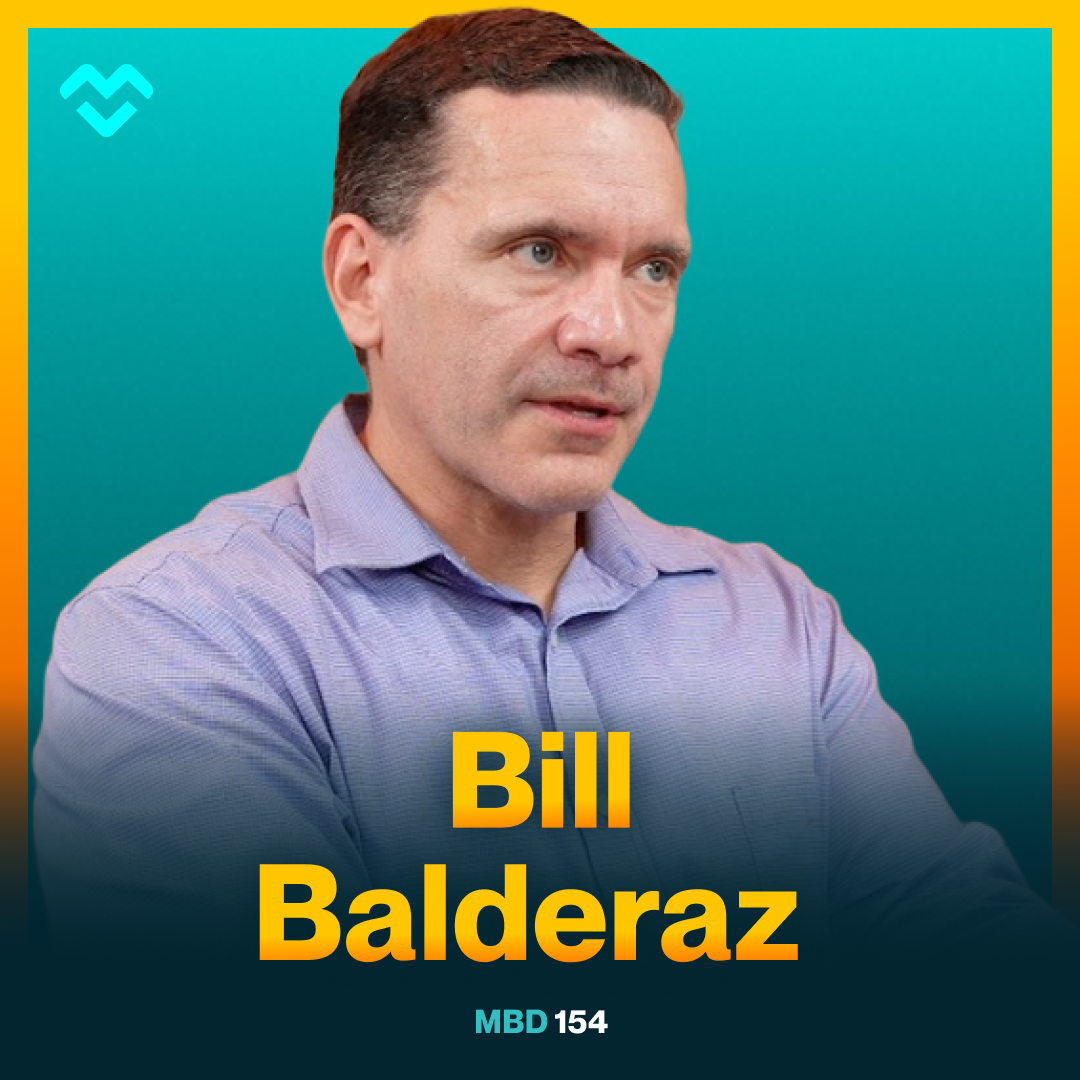
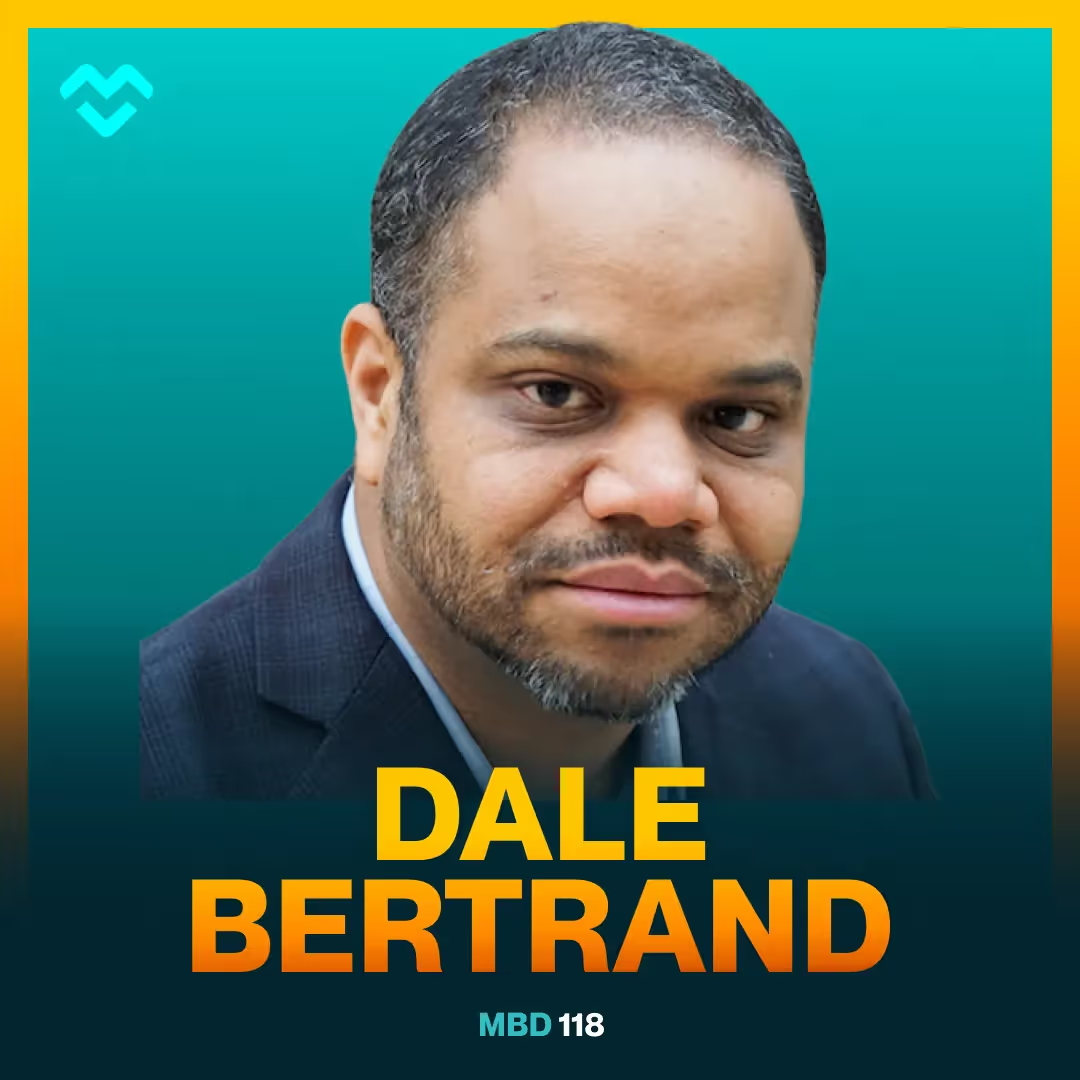
Bill is the founder and CEO of Futurety, an Inc. 5000 data analytics and marketing consulting firm in Columbus, Ohio. He also built HUCKLE, a platform giving small and mid-sized businesses access to consumer data that used to cost six figures to touch. He sits on the board of Franklin University. He's an investor and advisor to more than 20 startups. And he started his first company out of a $600-a-month office with a logo designed by a friend.
Before any of that, he was a kid in St. Mary's, Ohio who thought he'd bartend for a living.
I sat down with Bill on Marketing by Design to talk about what building actually looks like when you don't come from money, don't come from a tech hub, and don't have a playbook to follow. What came out of that conversation is one of the most grounded, honest takes on entrepreneurship I've recorded across 140+ episodes.
The Town, the Table, and the Scholarship Nobody Mentioned
St. Mary's, Ohio is a factory and farming town in west-central Ohio. Small classes. Catholic school. The kind of place where going to Columbus felt like visiting another planet. Most people Bill knew growing up who had a college degree were teachers. The idea of building a company wasn't on the menu. It wasn't even in the restaurant.
His plan was simple. Tend bar. Live on the lake. Write. He had a Hemingway-style picture in his head, and he was fine with it.
Then in May of his senior year, a friend sitting next to him in study hall pointed at a Bowling Green catalog and said, "Aren't you this?" He was pointing at a section about National Merit Scholars. Bill was one. Nobody had explained what that meant. Not his guidance counselor. Not his family. When he called Bowling Green that night, they told him it was a full ride. Room, board, tuition. Everything.
He drove up a few days later and enrolled.
That single moment redirected the entire arc of his life. But it didn't hand him a career. It just opened the door to a hallway full of more doors he'd have to find on his own.
Journalism Died. The Internet Showed Up. Bill Kept Moving.
Bill graduated with a journalism degree in 1997. That was the year newspapers started dying because of the internet. He did some internships, knew he wasn't a great journalist, and watched the industry collapse around him in real time.
But while traditional media was shrinking, something else was expanding. Companies were building websites and had no idea who should write for them. Journalists turned out to be the closest fit. They could write. They could organize information. They could tell a story. Bill, like a lot of people in his generation, pivoted into digital marketing before the industry had a name.
His first real digital role was at a dot-com startup where his job was to help them rank well on search engines. This was a year before Google was founded. Search engines were AltaVista and Yahoo. There was no playbook. No one seven levels above him who knew more than he did. He just tried things on the website and saw what worked.
By 27, he was getting paid to speak at national conferences because no one in the world had been doing SEO longer than he had. Not because he was a genius. Because he showed up early and never stopped.
That pattern would repeat itself for the next two decades.
The Entrepreneurial Seed That Was Always There
Even before the scholarship, before the degree, before the first website, the instinct was there.
Bill's maternal grandfather, who he never met, owned a grocery store in rural northwest Ohio. His mother grew up making change at the register and delivering groceries on roller skates. That family legend planted something. Bill couldn't always name it, but it was running in the background the whole time.
In high school, he and a friend talked about starting an ad agency. In college, even while pursuing journalism, he'd find himself daydreaming about building something. And once he got into the workforce, the instinct sharpened. He watched the founders and CEOs he worked for. He studied how they made decisions, how they handled problems, how they built teams. He didn't resent them. He admired them. And he wanted to do what they were doing.
That admiration led him to three people who would shape everything that came next.
Three CEOs Who Gave a Kid a Seat He Didn't Earn
Bill names three leaders who changed his trajectory, all based in Columbus.
Carol Clark was the first CEO who brought him into conversations he had no business being in. He was 22, 23 years old, sitting in rooms where fundraising strategy and company direction were being discussed. She's still a friend and advisor today, and Bill credits her with doing more for the angel investing community in Columbus and Ohio than almost anyone.
Mike Morgan, of Updox, did the same. Brought Bill into high-level conversations early, became a personal friend, and remained an advisor long after their working relationship ended.
Pamela Springer was the third. She led the company that brought Drive Capital to Columbus. Bill leans on her when he hits a problem he truly cannot solve. He said there's nothing he'll ever run into that she hasn't already handled successfully.
Bill made a point that stuck with me: having those three mentors was as good as an MBA from anywhere. The relationships, the exposure, the willingness of people who had no reason to invest time in him to invest it anyway. That's a Columbus story. And it's the foundation everything else was built on.
Building Futurety by Asking One Question
When Bill decided to start Futurety in 2014, he didn't have a product. He didn't have a business plan. He took math pass/fail in college. He could not do the technical data work himself.
What he had was a network.
So he went to the people in that network and asked one question: what's one thing you would pay me to solve for you right now?
He didn't pitch them. He didn't show up with a deck. He said, "You tell me what Futurety is."
Three or four of them said the same thing. We have data scattered across a dozen places. It contradicts itself. Nothing talks to each other. We want one source of truth, one dashboard that shows us everything.
That became Futurety.
His wife, a gifted math teacher, came on board and quit her teaching job for a couple of years. He found a couple of sharp grad students at Ohio State to do some of the early technical work. He operated out of a broom closet with no windows or ventilation for over a year because he didn't care where he sat. He just liked what he was doing.
Today, Futurety is an Inc. 5000 company serving hospitals, government agencies, retailers, and tech startups with data engineering, AI, advanced analytics, and digital marketing. The company that started with one question and zero technical skills now has a full team, a software platform, and clients across regulated industries nationwide.
"No Matter Who Won, We Won"
Before Futurety, Bill built Webbed Marketing. It started as a one-man consultancy and grew into one of the fastest-growing interactive marketing agencies in the Midwest.
The growth strategy was not about being the best at SEO or social media. It was about spending every day meeting with traditional marketing agencies that were great at TV, radio, print, and billboards but had no idea how to do digital. Instead of competing with them, he positioned Webbed as their sub-contractor. He pitched every agency that would take a meeting.
Eventually, a major regional bank issued a statewide RFP. Every agency wanted it. There was a large digital component. And every single agency that submitted a proposal had Webbed baked in as the digital partner.
No matter who won the contract, Webbed won.
That outcome didn't come from technical superiority. It came from Bill spending all of his time in rooms with people who needed what he had. It came from relationships. And it's the same playbook he runs today.
The Four Values That Run Everything
Most companies have core values. At most companies, the employees couldn't tell you what they are.
At Futurety, the values drive hiring, promotions, and terminations. They're on the wall. They're in the interview process. They're in how the team talks about what went right and what went wrong.
Be accountable and trust. When someone shows you their work, trust it. Don't micromanage. Don't triple-check. That instinct is critical for surgeons and pilots. It kills momentum in a fast-moving consulting firm.
Relentless forward movement. When the key hire you wanted takes a job somewhere else, you call the next person on the list immediately. No pausing. No feeling sorry for yourself. Forward.
Relationships around the world. Never burn a bridge. Be generous with your time and your introductions. The compounding returns on genuine relationships are the best investment you'll ever make.
Challenge yourself and others. When you're comfortable, you're not growing. Push. Always.
Bill's litmus test for a good core value is sharp: the opposite of the value should also be a reasonable position for a different company. "Don't steal" is a universal truth, not a core value. "Trust without checking" is a real stance that plenty of organizations would reject. That's what makes it effective.
Since implementing these values deliberately, Futurety's employee retention has been consistently high. They almost never lose a team member. And when someone does leave, it's usually a planned, collaborative transition that was discussed months in advance.
Cowboys, Sheriffs, and Why Your First Four Hires Determine Everything
Bill shared a framework from an episode of a podcast he listens to that immediately clicked for him: the cowboy vs. the sheriff.
The cowboy shoots at things, gambles, wanders, makes a mess, and eventually hits the jackpot. The sheriff comes along and provides stability, structure, and prosperity through order.
Most founders are one or the other. Bill said he can think of maybe two people in his entire career who were legitimately good at both.
He's the cowboy. He's wired to make connections, chase new markets, and see what's around the next corner. Sam Underwood, Futurety's president, is the sheriff. Process, operations, finance, benefits packages, seating charts. The two of them could not be more different, and that tension is exactly what makes the company work.
When Bill advises startups now, he maps out the personality profiles of the founding team and looks for gaps. His recommendation: your first four hires should be a visionary, an analyst, a process person, and a relationship builder. Not four more versions of yourself.
Two Failures That Were Just Too Early
Bill was transparent about two ventures that cost him real money and real time.
The first was called Renaissance Use. In 2006, he wanted to let college students buy individual chapters of textbooks online instead of paying $300 for a book they'd barely use. The idea was years ahead of its time. There were no iPads. E-commerce wasn't built for micro-transactions. Desktop screens were miserable for reading. Not a single sale.
The second was a telemedicine company he launched right before COVID hit. Insurance companies didn't cover telemedicine. Consumers didn't understand it. He shut it down just months before the entire world adopted virtual healthcare practically overnight.
Both ideas were right. The timing was wrong. And Bill talked about them without a trace of defensiveness. He called them tragically, terribly, expensively wrong. That kind of honesty is rare in founders who've had real success. It's also the reason people trust him.
The Future Is Smaller Companies With Bigger Data
The thing Bill is most energized about right now is what he calls the democratization of data.
HUCKLE, the platform Futurety built, lets businesses access consumer insights that used to be locked behind enterprise contracts. Demographics, behaviors, purchase habits, 350+ data points on your existing customers. What used to cost $25,000 to $50,000 through a traditional market research study is now accessible for a fraction of that.
Bill sees a future where a growing class of small and mid-sized companies compete effectively against massive incumbents. Not because they have more resources, but because the tools have leveled the playing field. Payroll systems, accounting software, marketing automation, consumer data platforms. All of it is now within reach for businesses that would have been locked out five years ago.
For marketers and founders watching the landscape shift, the advantage right now is not capital. It's willingness. Willingness to move first, build relationships before you build products, and use tools that are available to everyone but adopted by almost no one.
Bill Balderaz went from a farming town to an Inc. 5000 company in Columbus by doing exactly that. And the playbook hasn't changed.
Listen to the Full Episode
This conversation with Bill Balderaz is live on Marketing by Design wherever you listen to podcasts. If you're building something, hiring your first team, or just trying to figure out what actually matters when the ground keeps shifting, this one is worth your time.
Get the best marketing jobs in Columbus delivered to your inbox every week: columbusmarketingjobs.com







.avif)


.avif)


















.avif)

.avif)
.avif)
.avif)
.avif)
.avif)
![[GREATEST HITS] Lacey Picazo on Differentiating Yourself as a Marketer/Creative in Columbus](https://cdn.prod.website-files.com/697bc5477a07f38cecb116d4/6993c46884f01f1608ed863d_67edf1ef876dadc49a875b6b_Lacey%2520Spotify.avif)
.avif)

.avif)
.avif)
.avif)
.avif)
-1.avif)


.avif)