
Most marketing problems don't look like problems at first. They look like confidence.
A founder knows their market. A team has been in the category for a decade. A leadership group has sat through enough quarterly reviews to recite the customer profile from memory. And then someone like Clay Ostrom shows up, runs a handful of interviews, and the whole story cracks open.
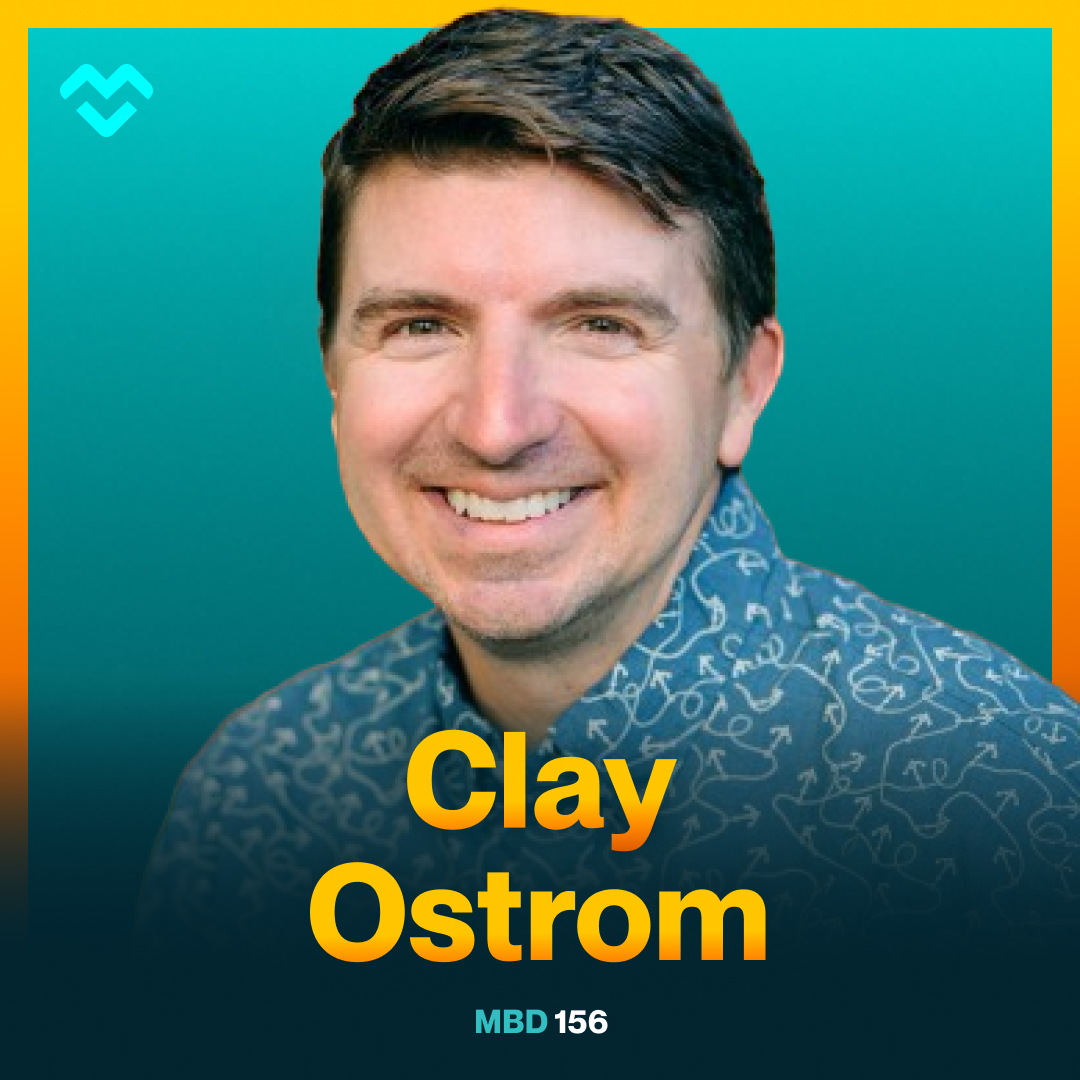
Clay is the founder of Map & Fire, a brand strategy and research agency he's been running for 11 years. I sat down with him for this episode of Marketing by Design after meeting him in Florida, where he was easily the most present person in a room full of marketers. That presence, it turns out, is the same thing that makes him good at his actual job: listening to people long enough to hear what they're really saying.
The Winding Path That Built the Agency
Clay's background doesn't read like a traditional agency founder's. His degree is in computer science. He spent years as a developer. He worked inside startups, then inside an agency, where he finally got a seat at the table with decision makers and realized he didn't want to just receive ideas anymore. He wanted to help shape them.
That tension between the analytical brain and the creative one is the thing a lot of operators never resolve. Clay built Map & Fire specifically so he wouldn't have to choose. Strategy, research, writing, UX, development, all of it sits under one roof because that's how his head actually works.
Eleven years in, he'll tell you plainly: it's the longest he's ever stayed in one job, and he's probably unemployable now. Most founders I talk to say some version of the same thing.
Why Research Became the Front Door
When Clay started Map & Fire, he thought of it as a brand strategy agency that also did research. Research was a differentiator, a way to stand out from the more traditional creative-first shops. Over the last two to three years, that relationship has completely inverted.
Now, research is the front door. Every project starts there. Sometimes it leads into positioning, messaging, or a full brand strategy engagement. Sometimes the research is the deliverable, and the client takes the insights and runs. Either way, Clay's conviction is clear: you cannot build a defensible strategy on top of assumptions you haven't tested.
AI has obviously changed parts of this. Clay built Smoke Ladder, an AI tool that helps teams analyze a website's positioning and messaging and find the gaps. It's genuinely useful. It speeds things up. But he's careful about what it can and can't replace.
What it can't replace is the 45-minute conversation with a real buyer.
The Case Study That Flipped a Brand
Clay shared a story that landed hard for me, because we do a lot of work in healthcare at MMG Design and I've watched this exact pattern play out.
A client in the aesthetic medical space came to Map & Fire convinced they knew their competition. Other aesthetic service providers, obviously. People doing the same procedures they were doing. That was the frame everyone on the team was operating from, and these were experts with real depth in the category.
Then Clay's team started interviewing actual customers. And the story they heard was not the story the client was telling.
Customers weren't comparing aesthetic providers against each other. They were starting their journey at a dermatologist's office, or a primary care physician, because what they really wanted was trust. They were treating it like a medical decision, not a beauty decision. The personal history went back to childhood. The emotional weight was enormous. The decision-making path was long, careful, and rooted in safety.
That one insight reframed everything. The positioning shifted from aesthetic expertise to medical credibility. The messaging moved from outcomes to trust. And the client, who had been in this business for years, told Clay they'd never seen their own category that way before.
This is the part people miss when they reach for synthetic research or an AI summary of reviews. You can approximate what people think. You can build a plausible persona. But until you sit across from a real human and hear them tell their own story, you don't actually know.
The Creative Founder's Real Tension
One of the best parts of this conversation was when Clay got honest about the thing every creative operator fights with: craft versus margin.
The definition of good creative work is that you keep going. You refine. You push the last 1% that nobody in the scope of work is paying you for. That's the part you fell in love with in the first place. That's the part that made you start the studio.
And then you run a business, and time is money, and clients have their own deadlines, and nobody is rewarding you for the invisible polish. You start to realize that the goal isn't maximum craft. It's enough craft to deliver an exceptional experience without holding the client back from the thing they're actually trying to do, which is run their own company.
Clay's answer isn't that you solve this. It's that you find the line, project by project, and you get honest about where the real value lives. For a research project, the value is the insight, not the 40th revision of the slide layout. For a positioning project, the value is the strategic clarity, not the font kerning on the executive summary.
This is the reality nobody tells you before you start a studio. You spend ten years getting good at the craft, and then the business asks you to stop doing it every day.
The Morning Protection Rule
Something practical I want to pull out of this episode: Clay protects his mornings.
He does his best thinking when he's clear-headed, well-rested, caffeinated, and not yet buried under a thousand emails. So he guards that window for the thoughtful work. Strategy. Writing. The kind of thinking that compounds.
If you're a founder who feels scattered, this is the smallest, most repeatable move you can make. Look at the last week honestly. When were you actually sharp? Put the work that matters most there. Move everything else.
Clay's 180 on Sales
The part of this conversation I most wanted to get to was sales, because Clay is one of the only operators I've talked to who will straight up tell you he used to hate it and now he genuinely enjoys it.
The shift, as he describes it, is a mental one. He stopped thinking of sales as convincing people of something, and started thinking of it as finding fit. He's not on the call to sell you. He's on the call to tell you what Map & Fire does and figure out, together with you, whether there's real alignment between what you need and what he provides. If there is, great. If there isn't, that's also fine, and honestly more valuable than pretending otherwise.
That reframe puts you in a different posture. You stop performing. You start interviewing. You ask more questions than you answer. You get out of your own head about how you're coming across and you get curious about the person sitting on the other side of the call.
Clay's second point on sales is even more important: detach from any single deal. Early on, every opportunity feels like it will make or break you. Over time, you realize there is no one deal. There's no single call that determines your year. Once you internalize that, the pressure drops, the conversations get better, and counter-intuitively, you close more.
And his third point is the one I keep coming back to: if you're just genuinely honest, you're already in the top 10% of salespeople. Most buyers have been pitched at so much that a real, human, unagenda'd conversation feels almost radical.
What To Actually Do With This Episode
If you're a marketer or founder listening to this, here's what I'd take away:
Stop assuming you know your customer. Schedule three interviews this month. Not a survey. Not an AI panel. Three real humans, 30 to 45 minutes each, on a call where you mostly listen. You will learn something that flips a decision you were about to make.
Treat research as the front door to any serious initiative, not the afterthought. You don't need a big agency engagement to do this. You need a notebook and the discipline to shut up.
Find your own line between craft and margin, and get honest about where the value actually lives on each project. The clients you want to work with aren't paying for your suffering. They're paying for your judgment.
And if sales has always felt like the thing you dread, try Clay's reframe. You're not selling. You're finding fit. Let the call go where it goes.
Where To Find Clay
You can find Clay on LinkedIn, check out Map & Fire, or run your own site through Smoke Ladder to see where your positioning and messaging might be slipping.
And if you want the tool I use to make high-stakes website decisions defensible inside marketing and leadership conversations, grab the High-Converting Websites Visual Swipe File at mmg.studio/visualswipefile.











.avif)





.avif)































.avif)


.avif)
.avif)
.avif)
.avif)
.avif)
![[GREATEST HITS] Lacey Picazo on Differentiating Yourself as a Marketer/Creative in Columbus](https://cdn.prod.website-files.com/697bc5477a07f38cecb116d4/6993c46884f01f1608ed863d_67edf1ef876dadc49a875b6b_Lacey%2520Spotify.avif)
.avif)

.avif)
.avif)
.avif)
.avif)

-1.avif)


.avif)
