
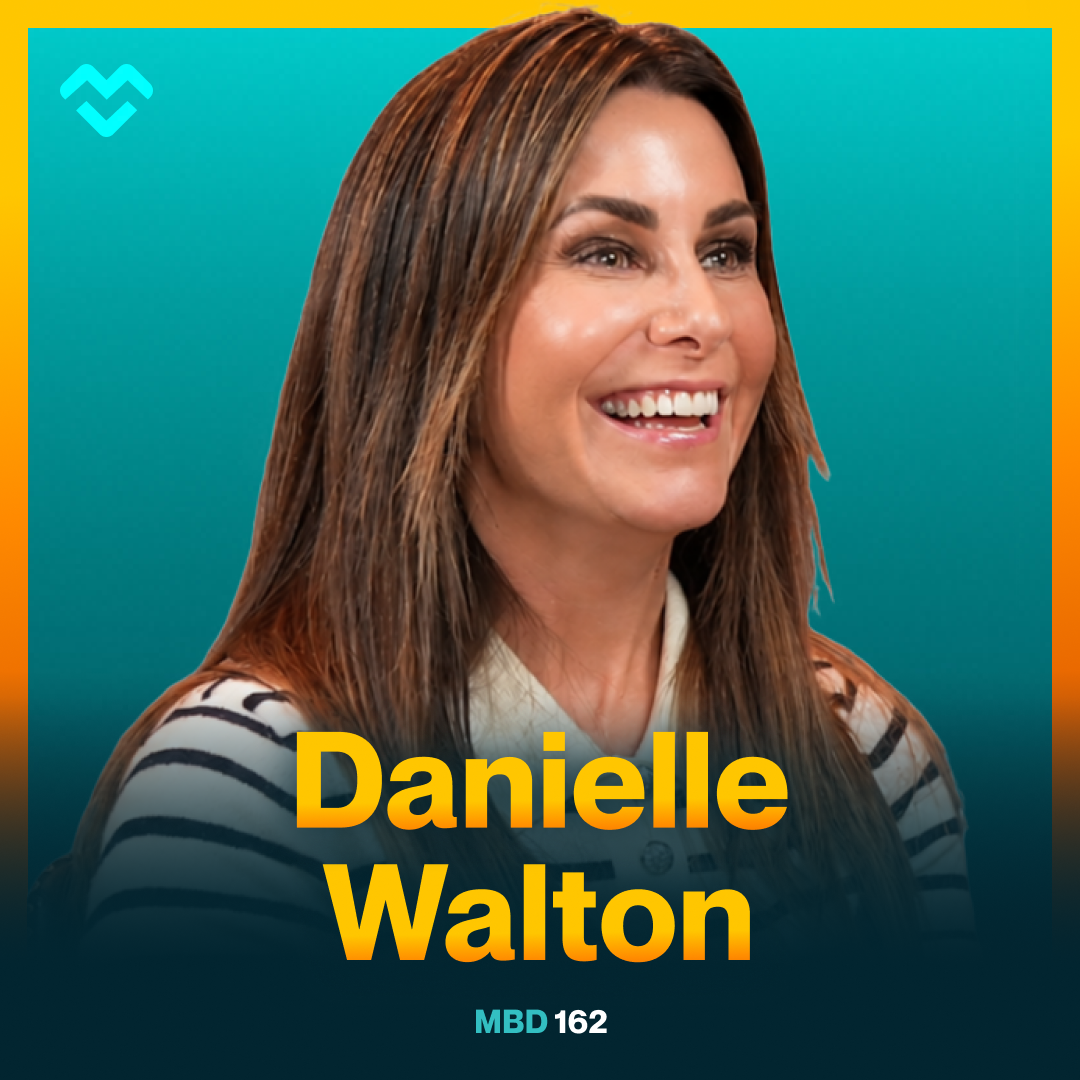
She Built It to Sell: What Danielle Walton Learned Running, Scaling, and Exiting a Columbus Marketing Agency
There's a version of the agency acquisition story that gets told a lot. The founder works hard for years, someone comes knocking, they sign papers, pop champagne, and ride off into the sunset. Clean, simple, aspirational.
That's not the story Danielle Walton tells.
Danielle is the co-founder of Adept Marketing, a Columbus-based digital agency she built from a two-person shop in 2006 into a 40-person team with clients like Fifth Third Bank, Ohio State University's Wexner Medical Center, AEP Energy, and AAA Ohio. Adept made the Inc 5000. It made the Columbus Fast 50 multiple times. And in January 2022, it was acquired by Smith, a global performance commerce agency.
By most definitions, that is success. But when I sat down with Danielle on Marketing by Design, she didn't lead with the wins. She led with the gaps, the mistakes, and the moments where they almost got in their own way. That honesty is exactly why this conversation is worth your time.
The Part Nobody Talks About: Running the Business Like a Business
When Danielle and her business partner Justin Spring launched Adept at the end of 2006, they did what most early-stage agencies do. They said yes to almost everything. TV, radio, web, print, whatever paid. They were scrappy. They were building.
But within the first year or two, a pattern emerged. Clients kept asking the same question: if I put money here, what will it return? And Danielle realized they could only answer that question with confidence in one place: digital.
So by 2008, they made a call. Digital only. No mass media. No TV. No print. No radio. All in.
That sounds obvious in 2026. In 2008, it was a genuine risk. Digital marketing was still emerging as a discipline. Most agencies their size were still trying to be everything to everyone. Saying no to revenue when you're running payroll and trying to grow a team is not a philosophical exercise. It's a hard, real decision that tests whether you actually believe what you say you believe.
They believed it. And they held the line.
That discipline, Danielle told me, is what separates the agencies that get built from the ones that just get busy. You can say all day that you're a digital shop. But if a print project walks in the door and you take it because the money is good, you're not a digital shop. You're just an agency that hasn't decided yet. And if you haven't decided, you can't execute the strategy. Because you're still doing the other stuff.
The Thing That Almost Held Them Back
Here's the line from this conversation that stuck with me the most.
At some point in Adept's growth, Danielle and her team looked around and realized they had a problem. They were great at executing. Clients loved the work. Results were real and measurable. Retention was strong.
And almost no one knew they existed.
"We were the best kept secret," Danielle said. "And then we were like, well, that's the worst thing ever. And by the way, you're in marketing."
I laughed when she said it. And then I felt it, because I've been in that same spot. When you're heads-down delivering for clients, it's easy to let your own marketing slide. The cobblers kids have no shoes. Marketers don't market themselves. It's the most predictable trap in the industry and almost every agency falls into it at some point.
Adept built a strong sales close rate. Once someone was in the room, they could win the business. But getting people into the room in the first place took longer to figure out than it should have. Danielle is direct about this: the sales process was their biggest structural weakness, and it's the thing she'd prioritize earlier if she were doing it again.
That admission matters. Because if you're building a services business right now and you're not thinking about how leads find you independent of referrals, you are building the same problem she had. And it's fixable. But it takes intention, and it takes starting earlier than feels necessary.
What Actually Makes an Agency Acquirable
I've had a lot of conversations about agency exits on this show. What makes Danielle's perspective different is that she's been inside one, not just read about it.
When I asked her what she and Justin did that positioned Adept well for acquisition, she gave two answers that most founders underestimate.
First: they were strong executors. Everything they promised clients, they delivered. That built a reputation and, over time, it built processes. Not glamorous processes. Written-down, documented, step-by-step processes that made the work repeatable whether Danielle was in the room or not. That repeatability is what a buyer is actually paying for. They're not buying you. They're buying the machine.
Second: they ran the business like a business from the beginning. Clean financials. Separate from personal accounts. A clear picture of what was profitable and what wasn't. This sounds basic, but it is genuinely rare in agency land, especially in the early years when every dollar feels personal.
The third thing, which she said they did later than they should have: implementing EOS, the Entrepreneurial Operating System. They brought it in around 2017, and Danielle describes it as a game changer. The clarity it created around roles, priorities, and accountability gave her the ability to step out of the day-to-day delivery of work. And that removal of herself from the critical path is, she told me, one of the things that made the business transferable.
If you run an agency and the whole thing depends on you showing up, that's not a business. That's a job you own. Buyers know the difference. So do you, if you're honest with yourself.
A Note on the Acquisition Process Itself
One of the most useful things Danielle clarified is the difference between private equity and strategic buyers, because the two get conflated constantly and they're not the same thing.
Private equity typically comes in when they see strong margins and want to make an already-efficient business bigger and leaner. For most services businesses, that's a less likely path. What's more common, and what happened with Adept, is a strategic buyer. Another operating business in an adjacent space that wants to grow by acquiring capability instead of building it from scratch.
Smith approached Adept. Danielle wasn't on the market. The deal happened because the fit was right and the offer made sense financially. That's how a lot of services acquisitions actually work. Which means the goal isn't to list your agency for sale. The goal is to build something so solid and so focused that the right buyer eventually notices.
She also pushed back on the idea that getting acquired is the ultimate definition of success. It's an experience worth having. It's a real financial event. But a services business generating strong margins for twenty years without ever selling is also a success. The acquisition frame is worth understanding. It's not worth making it the only goal.
Why Columbus Made This Possible
This is the part of the conversation I want more Columbus founders to hear, because I think we underestimate our own city.
Danielle built Adept here. She had the option to move the business to Northeast Ohio when she relocated there personally. She didn't, because the opportunity in Columbus was just different.
When her team was considering expanding into Cleveland, she reached out cold to 15 business owners to ask for 45 minutes of their time. All 15 said yes. She made the point plainly: that doesn't happen in New York. That doesn't happen in Austin. The openness of this market, the willingness of people here to share, to connect, to sit down with someone they don't know because someone they trust made an introduction, that is a genuine competitive advantage.
Columbus is a big small town. Big enough to have Ohio State, major employers, a real talent ecosystem. Small enough that reputation travels fast and relationships compound. For a referral-driven services business, that combination is close to ideal.
Danielle also pointed out something I think is underappreciated: the quality of talent here. Ohio State alone creates an access-to-talent dynamic that a lot of markets simply can't match. When you layer in the other major employers in the region and the lifestyle that keeps people here, you get a market that punches above its weight for building a team.
If you're a Columbus founder reading this, stop treating your geography like a limitation. It's an asset. Use it.
What Danielle Is Building Now
After the Smith acquisition in 2022, Danielle stayed on through 2024 and then stepped out. She's now running LGS Consultants, doing leadership and business strategy work with growth-stage entrepreneurs, and she and her husband are expanding his dental practice into a multi-location group.
That last part is interesting on its own. For the first time in her career, she's the client. Twenty years of running an agency and she never had that seat. Now she does, and she told me she finally understands some of the things clients were trying to say when they pushed back on process or questioned whether a meeting was actually useful. That perspective shift is real, and she wishes she'd had it earlier.
She's also an EOS evangelist now, which tracks for someone who saw it transform her own business. The pitch she gives is simple: people dismiss it because it seems too basic. That simplicity is the point. The system works precisely because it's easy to explain, easy to implement, and easy to hold your team accountable to. You can find her at LinkedIn and through LGS Consultants.
The Lesson That Runs Through All of It
There's a story Danielle told me early in our conversation about her grandfather. He was a milkman. Good at his job. And at some point he looked around and saw convenience stores starting to pop up and sell milk directly to consumers. He didn't panic. He didn't wait for things to fall apart. He just did the math and decided that in five years, his job was probably going away.
So he started over. He was 42. He became a dentist.
That instinct, seeing where things are headed before it's obvious and making a decision before you're forced to, runs through every smart call Danielle made with Adept. Going digital in 2008. Niching down even when it meant turning away revenue. Implementing EOS before the business outgrew her ability to manage it manually. Getting out of delivery before an acquisition made her absence a liability.
None of those decisions were easy in the moment. All of them look obvious in hindsight. That's always how it goes.
If you're building a services business right now, whether you want to sell it someday or just build something worth running for thirty years, this episode is worth your full attention. You can find it wherever you listen to podcasts.
And that, is marketing by design.





.avif)

.avif)









.avif)
.avif)
.avif)
.avif)
.avif)
.avif)
![[GREATEST HITS] Lacey Picazo on Differentiating Yourself as a Marketer/Creative in Columbus](https://cdn.prod.website-files.com/697bc5477a07f38cecb116d4/6993c46884f01f1608ed863d_67edf1ef876dadc49a875b6b_Lacey%2520Spotify.avif)
.avif)
.avif)
.avif)
.avif)
.avif)
-1.avif)

.avif)
