If this is what AI-enabled companies look like, we have a problem.
My name is Andy Milligan. I'm the founder of MMG Studio. We've launched over 100 Webflow websites, most of them in healthcare. I've spent years helping regulated companies build sites that earn trust and generate leads without cutting the kind of corners I'm about to walk you through. So when I tell you this story matters for your website, I'm telling you what I see every day on the other side of the table.
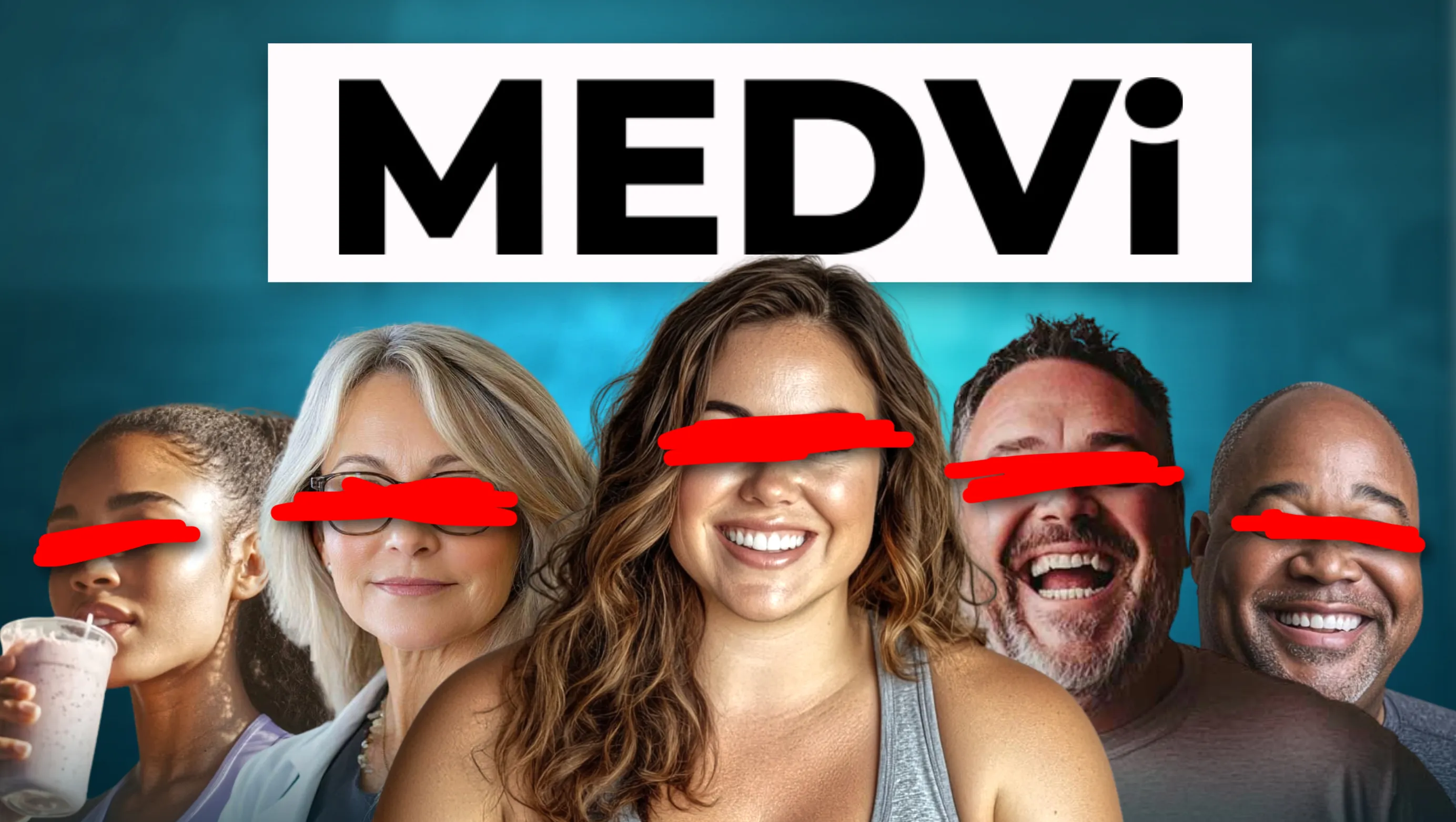
A telehealth company called Medvi did $1.8 billion in sales last year with two employees. The New York Times ran a profile framing it as the first one-person billion dollar company and proof that AI is rewriting the rules of business. Sam Altman said he wanted to meet the founder.
The article left out a few things.
Medvi's website featured before and after weight loss photos lifted from a Reddit user who never bought their product. Their Facebook ads ran under the names of AI-generated doctors like Dr. Tucker Carlson MD and Professor Albus Dongor. Their website listed real doctors who had no idea they were being used as the face of the company. The FDA sent them a warning letter for false and misleading claims. A class action lawsuit alleges their core oral product is pharmacologically inert.
And the press called it innovation.
The AI-enabled lie
Here's the part that bothers me most about the way this got covered.
The press framed Medvi as an AI-enabled company. The whole narrative treated it like a new era of productivity, a proof point that scale is now possible with two people and the right prompts. At the revenue level, sure, it worked. If this is what an AI-enabled company looks like, you can scale infinitely. But scale to what.
The drugs Medvi sells might be real. People genuinely want GLP-1 medications. That part is honest. But the company selling them isn't real. The doctors aren't real. The testimonials aren't real. The before-and-after photos aren't real. The voice convincing you it will work for you isn't real.
The entire reason anyone bought anything from Medvi is because a chain of fake people said it was good. Strip the fake endorsements out and there's nobody standing behind the product. Nobody to trust. Nobody who can tell you it worked.
This is the extreme version of selling something that doesn't exist. The outcome exists. The drugs exist. But the company claiming the benefits doesn't, and the stories proving it works were never real to begin with.
So here's the question every healthcare marketer needs to sit with. If nobody real has ever said the product is good, and the only thing convincing you to buy is manufactured by AI, is that marketing or is that deception.
I don't think there's a meaningful difference.
AI is going to make it easier than ever to generate testimonials, case studies, doctor headshots, patient stories, and outcome data that never actually happened. The question isn't whether you can. It's whether anything you build on that foundation holds up the moment someone starts checking. In healthcare, someone always starts checking eventually.
The five things to audit on your site this week
You're reading this thinking you would never do what Medvi did. You're right. You wouldn't.
But even legitimate B2B healthcare companies carry smaller versions of the same problem. Not because anyone set out to deceive anyone. Because websites accumulate debt. Marketing people leave. Clients get acquired. Approvals never get documented. A claim that started clean becomes something you can't fully defend. Here are the five things I'd check.
1. Case study authenticity
Every logo on your homepage, every quote in a testimonial, every stat in a case study should be traceable to a real client who signed off on it in writing. If you can't find the approval email in under five minutes, the content shouldn't be on your site.
2. Statistic substantiation
Every number on your site needs a source. Who measured it, when, and how. Regulators and reporters don't care whether the number is true. They care whether you can prove it is.
3. Team and advisor pages
Confirm every person pictured on your team and advisor pages still works for your company and has given written permission to be featured. This is the easiest point on this list to fix and the one I see violated most often on healthcare websites.
4. Stock photography in clinical contexts
Stock photos are fine. Stock photos used in ways that imply the person is your staff, your clinician, or your customer are not. If a visitor could reasonably assume a relationship that doesn't exist, fix it.
5. Compliance badges and claims
HIPAA, SOC 2, HITRUST. If any of these badges appear on your site, the current documentation needs to be sitting in a folder you can find in 60 seconds. Expired certifications are worse than no certifications.
The difference between Medvi and you
Medvi's problem isn't AI. It's that they built a website that said things that weren't true, and the press called it innovation instead of what it is. You're not going to make that mistake on purpose. But you might be carrying pieces of it from a previous marketing hire, a rushed launch, or a site you inherited and never fully audited.
Your website is the first place a regulator, a reporter, an investor, or a board member looks when something goes wrong. Make sure yours can hold up when they do.






.webp)
.webp)